*Sometimes all we need is a word, a little color, and the willingness to see what happens.*
Living with a disability can change how we experience the world. Things we once did without thinking may now require planning, assistance, or a completely different approach.
I know this from my own experience living with multiple sclerosis.
But something I've been discovering is that even when our physical abilities change, our curiosity, imagination, and desire to participate in life don't have to disappear.
And sometimes, exploring something new can open a door we didn't even realize was there.
It Can Start With Just One Word
Recently, I participated in a veterans' creative-writing class at the Grosse Pointe War Memorial in Michigan.
One of the most valuable things I learned was also one of the simplest.
We didn't always begin by trying to write a story. Sometimes we just wrote down words.
Words about how we felt. Words about our memories. Things we were grateful for, afraid of, or curious about.
There was no pressure to make everything sound perfect.
What fascinated me was watching those simple words gradually develop into thoughts, sentences, and eventually stories.
The class helped me realize I had more inside me than I knew. I found simple, creative ways to express what I was thinking and feeling, and I saw how something meaningful to me could be meaningful to someone else, too.
It reminded me that sometimes the hardest part of creating something is believing we have to know exactly what we're creating before we begin.
We don't.
Where AI Can Help
This is where artificial intelligence can become another useful tool.
Imagine writing down five words that describe how you're feeling today.
Maybe they're *hope, frustration, family, change,* and *gratitude.*
You could ask an AI assistant:
These are five words that describe what I'm thinking about today. Help me explore what connects them. Ask me questions so I can develop my own thoughts into a short reflection.
Notice that you're not asking AI to decide what you should feel or believe.
You're using it to help you express something that's already inside you.
For someone who struggles with typing, speaking, organizing thoughts, or simply knowing where to begin, that assistance can be valuable.
And it isn't limited to writing. AI can help us learn about subjects that interest us, prepare questions for appointments, explore hobbies, or find different ways of accomplishing everyday tasks.
But we should also recognize its limitations. AI makes mistakes, some tools aren't easy to access, and privacy matters. We should be thoughtful about what personal information we share.
Not everyone has access to the same technology, and that's important too.
Because creativity doesn't require AI.
Sometimes All You Need Is a Little Paint
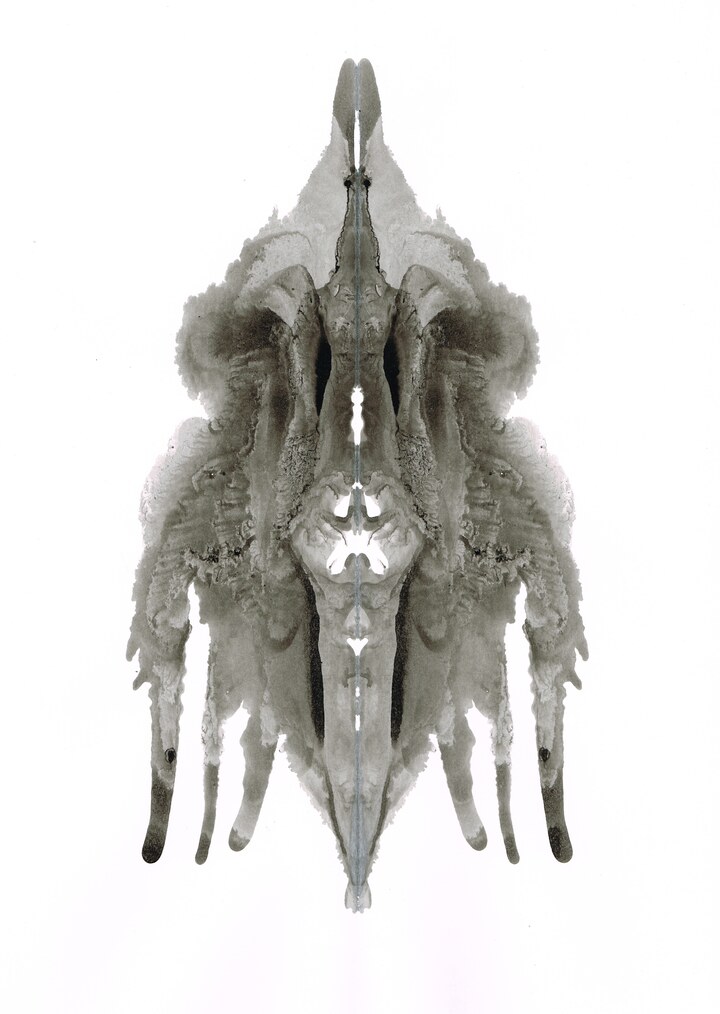

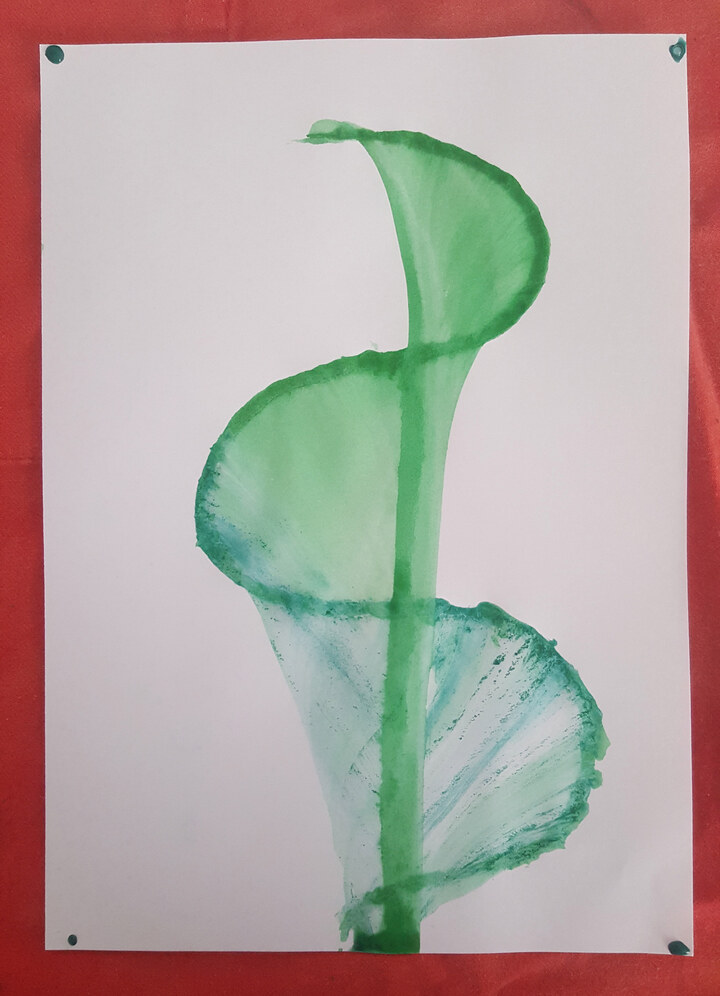

Another experience from my creative-writing class was exploring expression through art.
Here's an activity I'd love to share.
Choose three words that describe your feelings or experiences. Then imagine a color for each word.
Perhaps blue represents peace, red represents frustration, and yellow represents hope.
Take a sheet of paper and place a little paint on it.
Fold the paper and press it together. Open it and see what appears.
Maybe try placing a piece of string in the paint before folding the paper and gently pulling it through. Or use a sponge, a brush, or whatever works with your abilities.
There are no rules about what the finished picture should look like.
And here's another thought: **You don't have to finish it today.**
Perhaps tomorrow you add another color. Next week, another shape.
Over time, that piece of paper becomes more than a painting. It becomes an expression of moments, emotions, and experiences.
You might discover something about yourself simply by allowing the process to unfold.
And if holding a brush or manipulating paper is difficult, the activity can be adapted. Someone can help with the physical parts while you choose the colors, words, and direction. You might even explore creating art digitally.
The expression is still yours.
Independence Can Mean Many Things
We often think of independence as being able to do everything ourselves.
But I've come to see it differently.
Sometimes independence is being able to make our own choices, discover new interests, express our feelings, or participate in something meaningful, even when we need assistance.
Technology can help. Friends and family can help. Community programs can help.
And sometimes the simplest things—a conversation, a few words written on paper, or three colors of paint—can remind us that we still have something meaningful to contribute.
Disability may change how we do things, but it doesn't have to determine everything we can experience.
An Invitation to Possibility
If you're living with a disability, experiencing changes as you grow older, or simply looking for something meaningful to do, consider trying something new this week.
Write down a few words.
Choose a few colors.
Start a story, make a picture, explore a question, or learn something that has always fascinated you.
Use technology if it helps. Ask someone to join you if you wish.
And don't worry about creating something perfect.
You might be surprised by what begins to emerge.
**Sometimes the most important thing we create isn't the story or the painting. It's the opportunity to discover another part of ourselves.**
— OnDaRoof
*Adapted Adventurer — An Invitation to Possibility*
CONTINUE THE CONVERSATION
What did this story bring up for you?
Your experience may be different from mine—and that difference can help us learn. Share what resonated, what you question, or what you have discovered through your own changing abilities.
Reader reflections
Loading reflections…